

How to Choose a Cryptocurrency Exchange
A cryptocurrency exchange lets you buy, sell and store digital assets. Most mainstream platforms are custodial, meaning the company controls the private keys on your behalf until you withdraw.
 By FX Broker Info Research Team, Editorial & Broker Research Desk
Published
Updated 3 hours ago
How to Choose a Cryptocurrency Exchange
Buying your first Bitcoin takes minutes. Choosing the platform that will hold it takes more thought. Dozens of exchanges compete for retail customers, and their headline promises rarely tell the whole story. A low advertised commission can be offset by a wide spread, a card surcharge or a withdrawal fee. A polished app can sit on top of slow customer support. The good news is that a handful of clear questions separates sound platforms from risky ones. This guide walks through them in order so you can compare exchanges on evidence instead of marketing.
What a Cryptocurrency Exchange Actually Does
A cryptocurrency exchange lets you buy, sell and store digital assets. Most mainstream platforms are custodial, meaning the company controls the private keys on your behalf until you withdraw. That makes them convenient, but it also means your safety depends partly on the company's security and financial health. Some platforms focus on simple purchases funded by a bank card, while others offer advanced order books and derivatives. Deciding which kind you need is the first step, because it shapes every other choice on your list.
Step 1: Confirm the Exchange Is Authorised Where You Live
Start with jurisdiction. A platform may be well established in one country and unavailable in yours. In the UK, many firms register with the Financial Conduct Authority for anti-money-laundering purposes. Registration confirms that a firm has passed certain checks, but it does not mean crypto assets are regulated or protected in the way a bank account is. In the US, look at state-level licensing and federal registration.
Check the regulator's public register yourself rather than trusting a badge on the homepage. Also confirm how your money is protected. Most crypto holdings sit outside deposit protection schemes, and investment losses are generally not compensated.
Step 2: Add Up the Real Cost of Trading
Headline commissions are only one line of the bill. Exchanges often charge in several other places:
- Trading fees, sometimes split into maker and taker rates
- Spreads, the gap between the buy and sell price
- Card deposit surcharges, which can be significant for small purchases
- Withdrawal fees, both for money leaving the platform and for coins sent to a wallet
- Currency conversion charges if you fund or trade in a currency other than your bank's
To compare fairly, pick an amount you would realistically invest, such as £500 or $500. Then work out what it would cost to buy, hold briefly and withdraw on two or three platforms. Frequent traders should focus on maker and taker rates. Occasional buyers should watch spreads and card fees more closely. Fee schedules change often, so confirm the live figures before you deposit.
Step 3: Match the Platform to Your Experience
Beginner-focused apps offer simple buy buttons, recurring purchases and plain-language help. Advanced platforms provide candlestick charts, limit orders and sometimes leveraged products. Choose the simplest tool that does the job you need. A crowded trading screen increases the chance of mistakes, such as placing a market order when you meant to set a limit price.
If you are investing through a tax-advantaged wrapper, check early. Some brokers offer crypto inside products such as UK ISAs or pensions, while many do not, and some restrict crypto to certain investor categories. Do not assume support exists until you see it confirmed in writing.
Step 4: Check the Coins and Networks
A long list of coins looks impressive, but what matters is whether the assets you actually want are supported. Check the networks too. When you send crypto off-platform, the network you choose must match the receiving wallet. A mismatch can make funds unrecoverable. Confirm that the exchange supports the deposit and withdrawal methods you plan to use, and run a small test transfer before moving a meaningful amount.
Step 5: Treat Security as a Two-Part Checklist
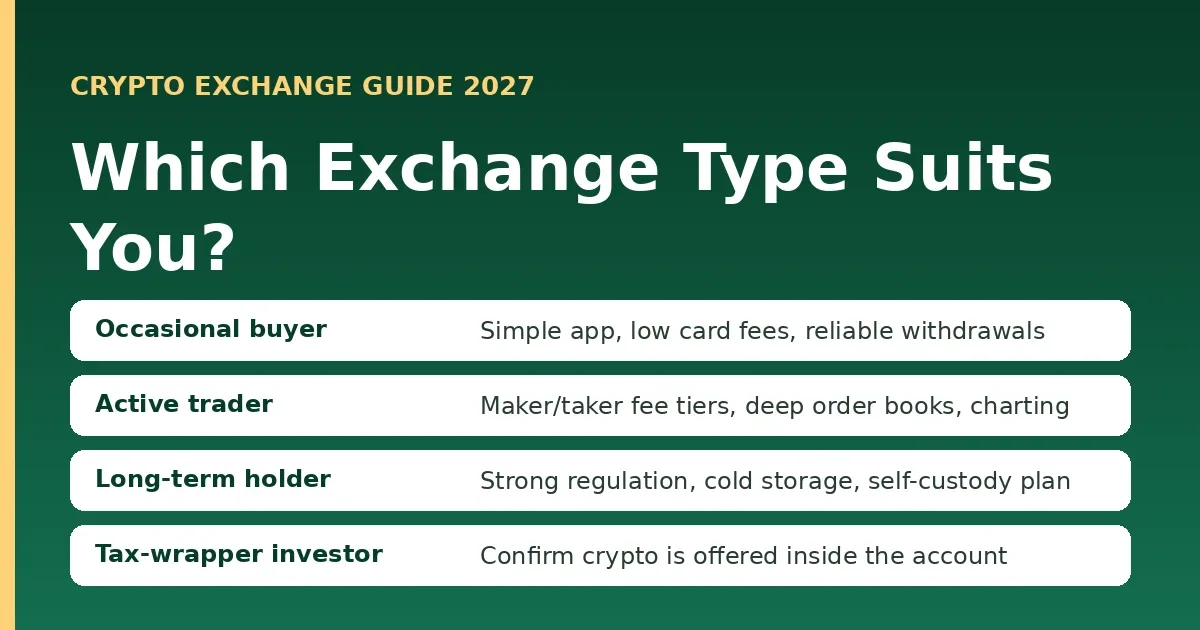
Security depends on the platform's protections and on your own habits.
On the platform, look for:
- Two-factor authentication through an authenticator app, not only SMS
- Withdrawal confirmations and optional address allowlisting
- Most customer assets held in cold storage
- Proof-of-reserves disclosures or regular third-party audits
- A transparent record of how past incidents were handled
An insurance fund can sound reassuring, but read what it actually covers. It is not the same as deposit protection.
On your side, do the following:
- Use a unique password stored in a password manager
- Turn on every available security setting
- Never share your recovery phrase with anyone, including people claiming to be support staff
- Move long-term holdings you do not trade to a wallet you control
Essential security checklist for choosing a crypto exchange
Step 6: Judge Support and Transparency
Good customer support matters most when something goes wrong, such as a delayed withdrawal or a locked account. Check which channels are available, whether there is live chat or a phone line, and how quickly recent reviews describe responses. Read reviews on independent sites rather than testimonials published by the company itself.
Clear terms, a published fee schedule and plain risk warnings are encouraging signs. Vague language, countdown timers and pressure to deposit quickly are not.
Red Flags to Watch For
- Promises of guaranteed or "risk-free" returns
- Recommendations from social media accounts paid to promote a platform
- Unsolicited messages offering investment help or "account recovery"
- Withdrawals that stall until you pay an extra fee
- Requests for your recovery phrase or remote access to your device
Pump-and-dump schemes and fake support accounts are common. Treat any unexpected contact about your crypto as suspicious until you have verified it through the platform's official website.
Which Exchange Type Suits You?
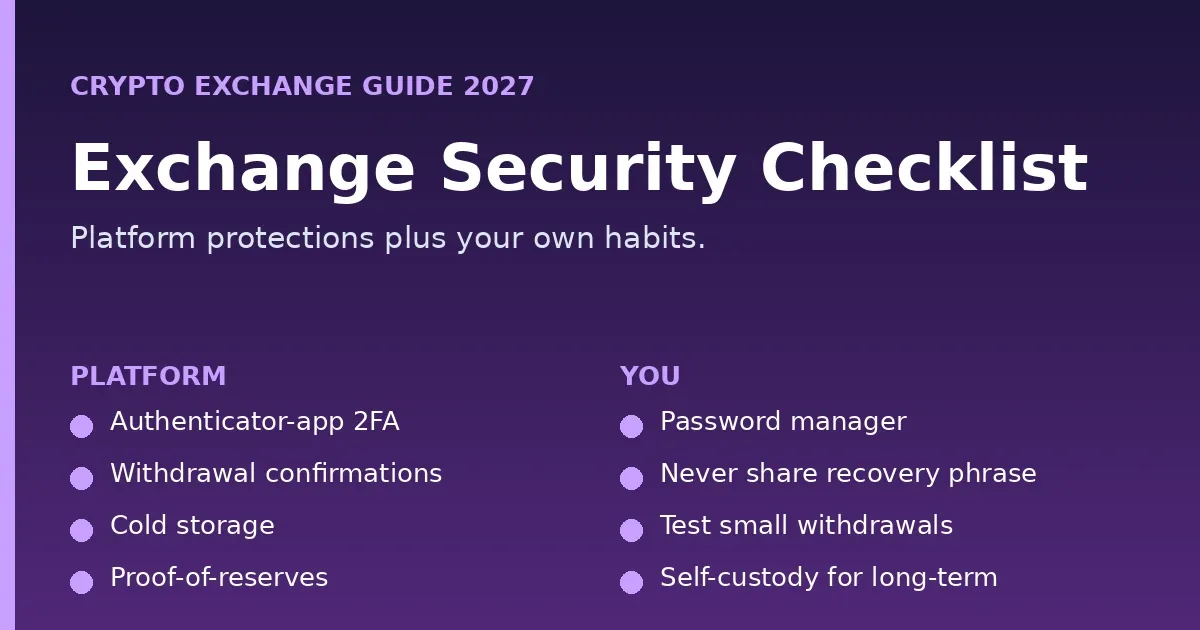
- Occasional buyer: A simple app with low card fees and reliable withdrawals usually beats a complex trading terminal.
- Active trader: Maker and taker fee tiers, deep order books and advanced charting matter more.
- Long-term holder: Strong regulatory standing, cold storage and a plan to move coins into self-custody carry the most weight.
- Beginner using a tax-advantaged account: Confirm that crypto is available within that account type before you start.
Choosing a crypto exchange by investor type
Frequently Asked Questions
Is there one best cryptocurrency exchange? No. The best platform is the one that fits your location, budget, experience and goals. Comparing two or three options against the same checklist works better than chasing a single top ranking.
Are my crypto assets protected if an exchange fails? Usually not in the same way bank deposits are protected. Protection depends on the jurisdiction and the platform's structure, so read the terms carefully and do not assume coverage.
Should I keep all my crypto on an exchange? Many people keep only the amount they actively trade on a platform and move the rest to a wallet they control. This reduces exposure if the platform is hacked or becomes insolvent.
How many exchange accounts should I open? Start with one or two. Each account is another set of credentials to protect and another place where verification and fees can apply.
Final Thoughts
Choosing a cryptocurrency exchange is less about finding the cheapest or most famous name and more about matching a platform to your situation. Confirm it is authorised where you live, calculate the full cost of a realistic trade, check security settings, and test withdrawals with a small amount first. Those steps take an afternoon and can prevent costly surprises later.
Disclaimer: This article is for general information only and is not financial advice. Crypto assets are volatile, and you could lose some or all of your money. Verify current fees, features and regulatory status directly with each provider before you invest.
Cryptocurrency exchange: What It Means for Traders
Developments like Cryptocurrency exchange matter because they change trading costs, product access or the conditions brokers offer. Read the details carefully, compare them with other brokers and size positions with risk in mind. For background, see this overview of the cryptocurrency.
Related guides on FX Broker Info
Frequently Asked Questions
What is Cryptocurrency exchange about?
A cryptocurrency exchange lets you buy, sell and store digital assets.
Why does it matter for traders?
It can affect trading costs, product access or the promotions available, so it is worth checking how it applies to your account.
Where can I check the official details?
Confirm dates and conditions on the official website of the company involved or with its customer support before acting.