
No Deposit Bonus · Valetax
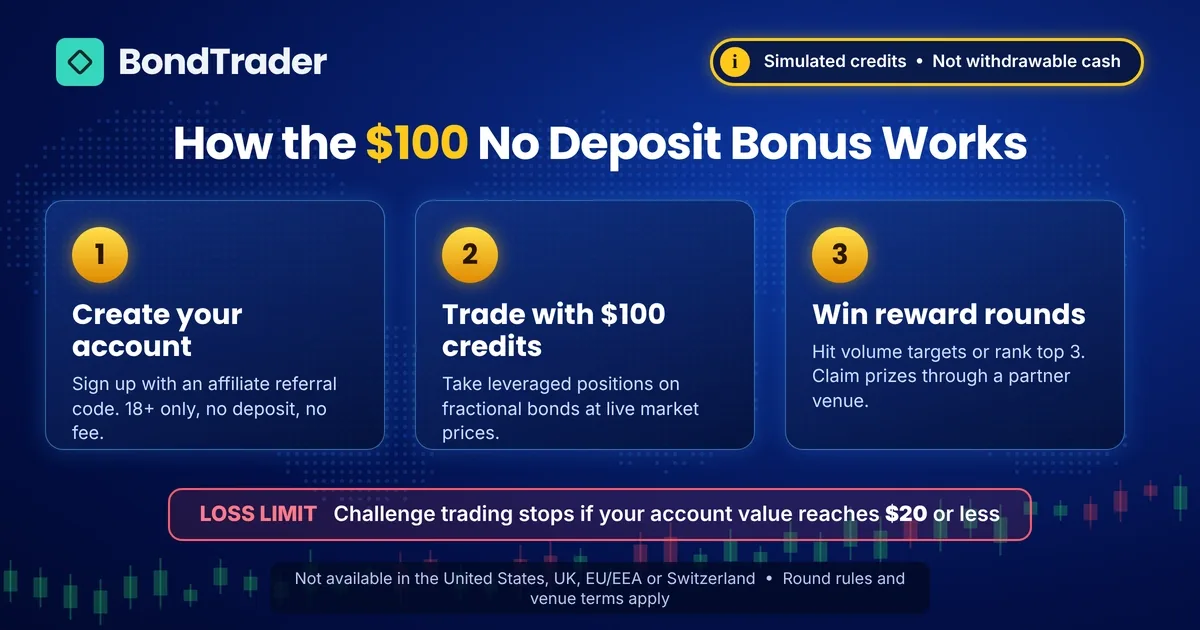
How to Claim the BondTrader $100 Bonus Deposit Bonus
Learn how to claim the BondTrader $100 no-deposit bonus, follow the…


Explore Forex no deposit bonus options in India and check account requirements, bonus conditions, and key details before choosing a broker.
Learn how to claim the BondTrader $100 no-deposit bonus, follow the…

Find out how the BYNIX Capital $50 free no-deposit welcome bonus…

Understanding the XQuotes $25 No-Deposit Forex Trading Credit In the…

Considering the Panther Capitals $30 no deposit bonus? Review the…

RoboForex $30 Welcome Bonus is often called a “no deposit bonus,” but…

Explore the BestMarkets $250 Forex No Deposit Bonus Gift Card, and…
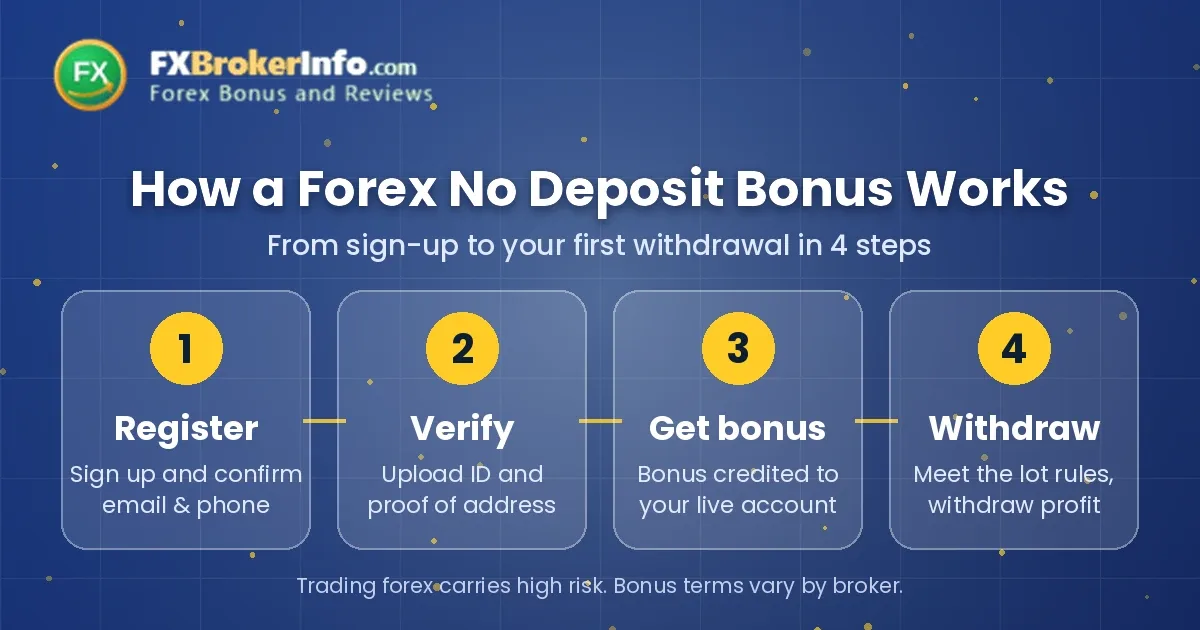
forex no deposit bonus lets you trade a live account with the…

Compare forex no deposit bonuses in Indonesia, including Grand…

Headway $1 Challenge Demo Contest How It Works and How to Join A…

Get started with Tickmill $30 Welcome Account and try free live…

JustMarkets offers a no deposit bonus to Indian traders, allowing…

JustMarkets extends a $50 no deposit bonus exclusively to forex…
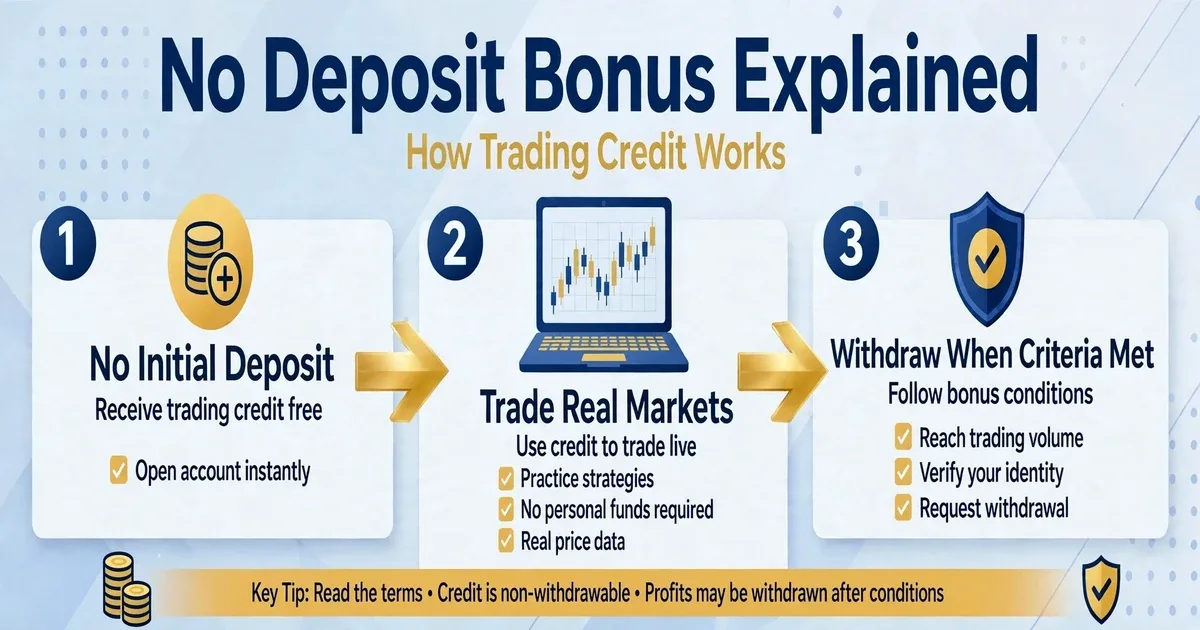
The STMarket $50 No Deposit Bonus is a welcome trading credit for new…

Learn about the JustMarkets $100 Limited Welcome Rewards Offer…

Valetax offers a no deposit bonus enabling traders to access crypto…

Valetax welcomes new traders with a $30 no deposit bonus, allowing…

MTrading offers a $100 no-deposit bonus to new traders, allowing you…

Valetax offers no deposit bonuses that allow new traders to access…

YWO provides a $100 no deposit bonus for new traders, granting…

Valetax grants new traders a $30 no deposit bonus upon account…
Many Indian traders first notice forex no deposit bonuses in advertisements and wonder whether they are a simple way to try the market. The idea is easy to describe: after registration and verification, a small trading credit appears in your account and you can place live orders without funding it. Before you think about claiming any offer, though, it is essential to understand the regulatory position in India, because the rules on forex trading by residents are restrictive and they affect whether an offshore broker can lawfully serve you at all.
Indian residents may trade currency derivatives on recognised exchanges under the rules of the Reserve Bank of India and the Securities and Exchange Board of India. Trading with offshore brokers that are not authorised in India may fall outside those permissions. Some brokers advertise to Indian audiences anyway, and their terms may say that residents are excluded or that the client takes on responsibility for local compliance. Check the current guidance from the Reserve Bank of India and, where needed, speak to a qualified adviser before opening any account.
Where an offer is open to a client, the credit on this page typically ranges from $10 to $100 and is quoted in US dollars. It is promotional, so it can be used for trading but normally cannot be withdrawn directly. Profit made with it may become withdrawable after you complete a volume target measured in lots, within a deadline. For Indian readers, translating those figures into rupees is a sensible exercise, because a small dollar credit can look very different once converted and once bank charges are considered.
Moving money between an Indian bank account and an overseas trading account is governed by foreign exchange rules, and the treatment of remittances for trading can be complex. Do not assume that a deposit or withdrawal route that works for one purpose will work for another. Ask the broker, in writing, how it treats Indian clients, which currencies it pays out in and whether any fee or conversion charge applies. Keep those answers with your records.
Two errors are common. The first is treating the credit as spare money to multiply, which encourages oversized positions and fast losses. The second is ignoring eligibility until after the account is open. An offer that is not available to your country of residence can be withdrawn or frozen, and that is a poor outcome for anyone who has already invested time in verification.
For most Indian readers, the most useful takeaway is a cautious one. Understand the regulatory rules first, read the exclusions carefully and treat any offshore credit as a risk to be assessed, not a free opportunity. If you are unsure whether a broker can lawfully serve you, the sensible course is to leave that offer alone and seek current guidance. Nothing on this page should be read as a recommendation to open an account with an unauthorised broker.
Compare these offers with our broker reviews and always read the broker's own terms before registering.